

New Webinar: Modernising Without Destabilising: How Bread Financial Is Building Confidence Through Change

Learn more

New webinar with Bread Financial

Learn more
Contact us

capacitas-cloud-ai-partner-gradient-016

Accelerate Growth with Stable Platforms

Capacity Management

Scale too slowly and you leave revenue on the table. Scale without visibility and you invest in capacity you don't need. Capacitas starts with your business growth ambitions and models forward, translating expansion plans, projected demand and seasonal peaks into technical capacity requirements and the investment needed to support each scenario. The result is a business case your leadership can act on, driven by evidence, not instinct.

Capacity built for business growth

Capacity planning done well is not a technical exercise. It is a business one. Many organisations have the data but the analysis stops at infrastructure thresholds, rather than connecting to the revenue, demand and growth scenarios that actually drive investment decisions.


Capacitas takes a different approach. Demand, performance, cost and scalability are analysed together, not in isolation, so every recommendation is grounded in the relationship between the metrics that matter. The output is not a technical report. It is clarity and confidence for the decisions that shape how your business grows.

£40m

capex deferred by 3-years through capacity optimisation

— an FTSE 100 firm

27%

subscriber growth supported with no additional cloud investment

— Cegid

£5.4M

in Black Friday revenue protected, with 2.5× traffic growth handled and no added infrastructure

— JD Sports

Edge unlocked

Invest with confidence
Know exactly how much technical investment is needed to support a given level of revenue or business growth, and justify that spend clearly to the board.

Scale without over-committing
Scenario modelling shows where capacity is needed and where efficiency gains can absorb more demand, so you spend only what growth actually requires.

Remove the bottlenecks to growth
Identify and resolve the constraints holding back performance and scalability before they become business-critical incidents.

THE TECHNOLOGY EDGE: THE COST OF GETTING CAPACITY WRONG CAN SHOW UP IN TWO WAYS: EITHER OVER-PROVISIONING, OR UNDER-DELIVERING. WE ELIMINATE BOTH: PRECISE MODELS, CLEAR SCENARIOS, CONFIDENT INVESTMENT DECISIONS.

Our clients

A four-stage model for Capacity Management

1. Discover

Identify risk and opportunity
As part of our initial engagement, we analyse your historical demand data to establish a precise baseline: how your systems have behaved under load, where bottlenecks exist today, and how capacity, performance and cost have related to each other over time. The output is a clear picture of where risk sits and where the greatest opportunities for improvement lie, forming the business case for what follows.

2. Realise

Build a complete picture of your capacity 
We review existing SLOs, incident history and architecture alongside structured interviews with engineering and operations stakeholders. We then translate business growth ambitions into technical demand scenarios: modelling how each will impact capacity and identifying where current architecture will hold and where investment will be required. We present a set of modelled scenarios, the likely investment and the performance outcomes. Where efficiency gains can increase throughput without additional spend, these are quantified.


3. Transform

Embed capacity planning as a business capability
Capacity management delivers most value when it becomes an ongoing discipline rather than a one-off exercise. We transfer the frameworks, models and ways of working your teams need to maintain a live view of capacity, respond to changes in demand and keep investment aligned to business objectives, building internal capability rather than ongoing dependency.

4. Support

Maintain the gains
Periodic checks for up to 12 months post-implementation ensure capability is retained, and quality is sustained. We provide additional resources to protect continuity during one-off spikes in resource demand.

Amplify technology performance

growth-chart-invest_RED

Business demand drives the model

Most capacity planning starts with technical metrics. Ours starts with your desired business outcomes: growth targets, market expansion plans, and demand projections. We translate those commercial ambitions into technical requirements, so the output is a business case, not just a technical specification.

engine-algorithm_RED

Demand, performance and cost, considered together

Analysing capacity in isolation from performance and cost produces incomplete answers. Our internally developed methodology examines how each metric behaves relative to the others, giving a more accurate, more confident view of what your systems can handle and what investment will actually achieve.
plan-strategy_RED

Technical and business scenario modelling for every growth path

Business growth rarely follows a single trajectory. We model multiple scenarios, from conservative to aggressive growth, so your leadership can evaluate the capacity and investment implications of each path and make informed decisions about where and when to commit.

open-box-check_RED

Efficiency before additional spend

Not every capacity challenge requires more investment. In many cases, efficiency improvements allow systems to support significantly more business throughput from existing capacity. We identify these opportunities as part of the engagement, creating value even where additional spend was anticipated.

track_RED

A business case your board can act on

The output of our capacity management work is not a technical report. It is a business case, showing how much new revenue can be supported, what investment is required and what the return looks like. Designed to inform executive decisions and justify capital allocation with confidence.

hr-group_RED

Partner from strategy to execution

We work alongside your teams throughout, from understanding your business growth ambitions to validating the models and supporting implementation of the roadmap. Our expertise in performance engineering means capacity recommendations are grounded in how systems actually behave under real-world demand, not theoretical benchmarks.

We have partnered with Capacitas since 2004. Over this period, together we have scaled key commercial and operations systems to deliver extraordinary business growth and successfully navigated our peak sales periods.

Craig Donald

Head of Operations Systems, easyJet

Capacitas identified and engaged with relevant functions within the business in a positive and creative manner, whilst demonstrating flexibility of both thought and approach. Capacitas remained fully focused on achieving the required outcome ultimately exceeding customer expectation.

Graeme Chalklin

IT Operations, T-Mobile

FAQs

What is Capacity Management?

Capacity Management is the practice of ensuring your technical systems can support your business demand, now and in the future, without over-investing in capacity you don't need or under-investing so that capacity constrains performance. It involves understanding how current systems perform under load, modelling how future demand will impact them, and identifying the precise investment required to support different growth scenarios. Done well, it keeps technical planning in lockstep with business strategy, so you scale efficiently and perform reliably. 

When should an organisation use this service?

This service is most valuable when there is uncertainty about whether systems can scale to meet projected growth, when bottlenecks are affecting performance or user experience, or when the business is planning a significant step change in demand, entering new markets, launching new products or preparing for a peak trading period. It is also increasingly relevant as organisations build out AI workloads across cloud, on-premise and hybrid environments, where the capacity implications are significant, often unpredictable and directly tied to cost. AI has made rigorous capacity planning more important, not less. 

What makes the Capacitas approach different?

The most significant difference is that we start with business demand, not infrastructure metrics. Rather than working upward from CPU utilisation or memory thresholds, we translate your business growth ambitions into technical demand scenarios, so every recommendation is framed in terms of revenue, growth and investment, not just technical thresholds. Our methodology examines capacity, performance, cost and demand together, producing more accurate outcomes and more confident and capable teams than approaches that treat these in isolation.

What outputs does this service deliver?

The primary output is a set of capacity scenarios, each showing the demand level modelled, the capacity required, the investment likely needed, and the performance outcomes expected. These are accompanied by a validated capacity model, a prioritised roadmap of recommended actions with timings optimised for return on investment, and identification of any efficiency opportunities that can increase throughput without additional spend. The outputs are designed to support executive decision-making and capital allocation.

Can this service reduce our infrastructure spend?

Yes, in many cases. Organisations that have scaled reactively often carry over-provisioned capacity that is not contributing to performance. Our analysis identifies where capacity can be safely reduced, and where efficiency improvements can support more business throughput from existing resource. The result is a more precise allocation of spend that supports growth without unnecessary cost.

Does this service work across different sectors and architectures?

Yes. Our methodology is designed to be architecture-agnostic,  applicable across cloud, hybrid and on-premise environments, and across any technology stack. The business-first approach means it is equally effective whether demand is measured in transactions, users, requests or any other business volume metric. Over 20+ years, we have delivered these services through multiple tech cycles, from distributed systems to cloud to AI, and have delivered measurable impact across: 


Latest Insights

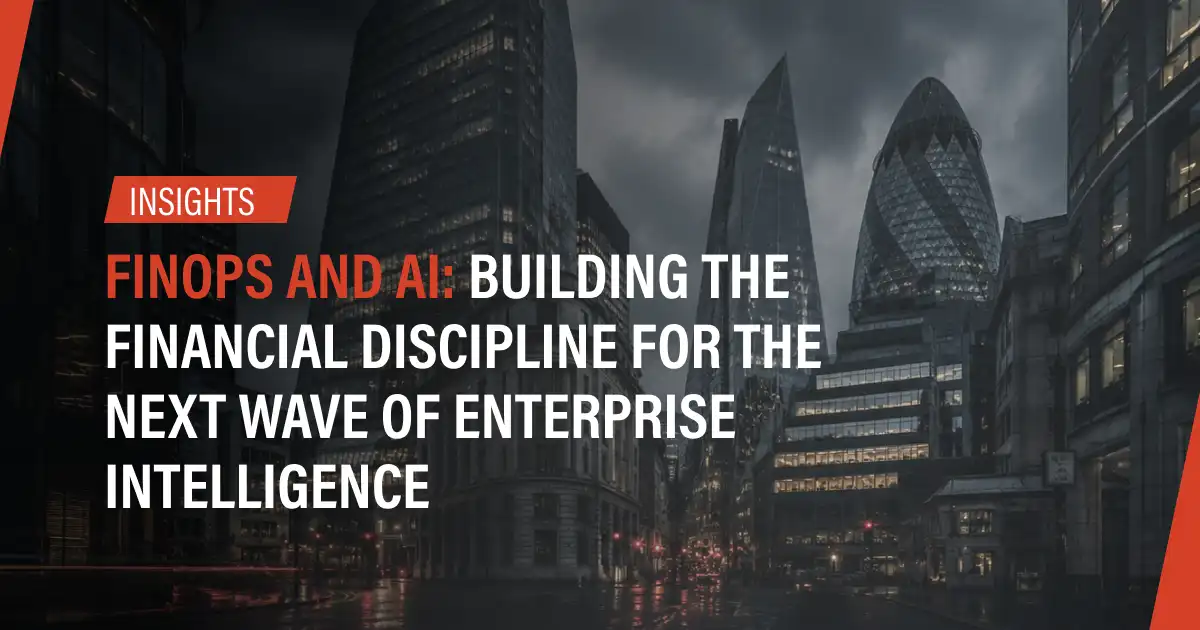
FinOps and AI: Building the Financial Discipline for the Next Wave of Enterprise Intelligence

AI FinOps represents an evolution rather than a replacement of traditional FinOps. It extends the model into a domain where financial, technical, and product decisions are tightly interconnected.

Read insight

Confidence Under Load: How We Verified AKS Readiness for Peak

How Capacitas verified AKS readiness for peak demand by validating workload performance, autoscaling, cluster capacity, monitoring, and incident response.
Read insight

Building Cloud Resilience: Lessons from the AWS Outage

Learning from the Latest Outage. Events like this week’s AWS disruption highlight one clear truth: resilience must be designed, not assumed.

Read insight