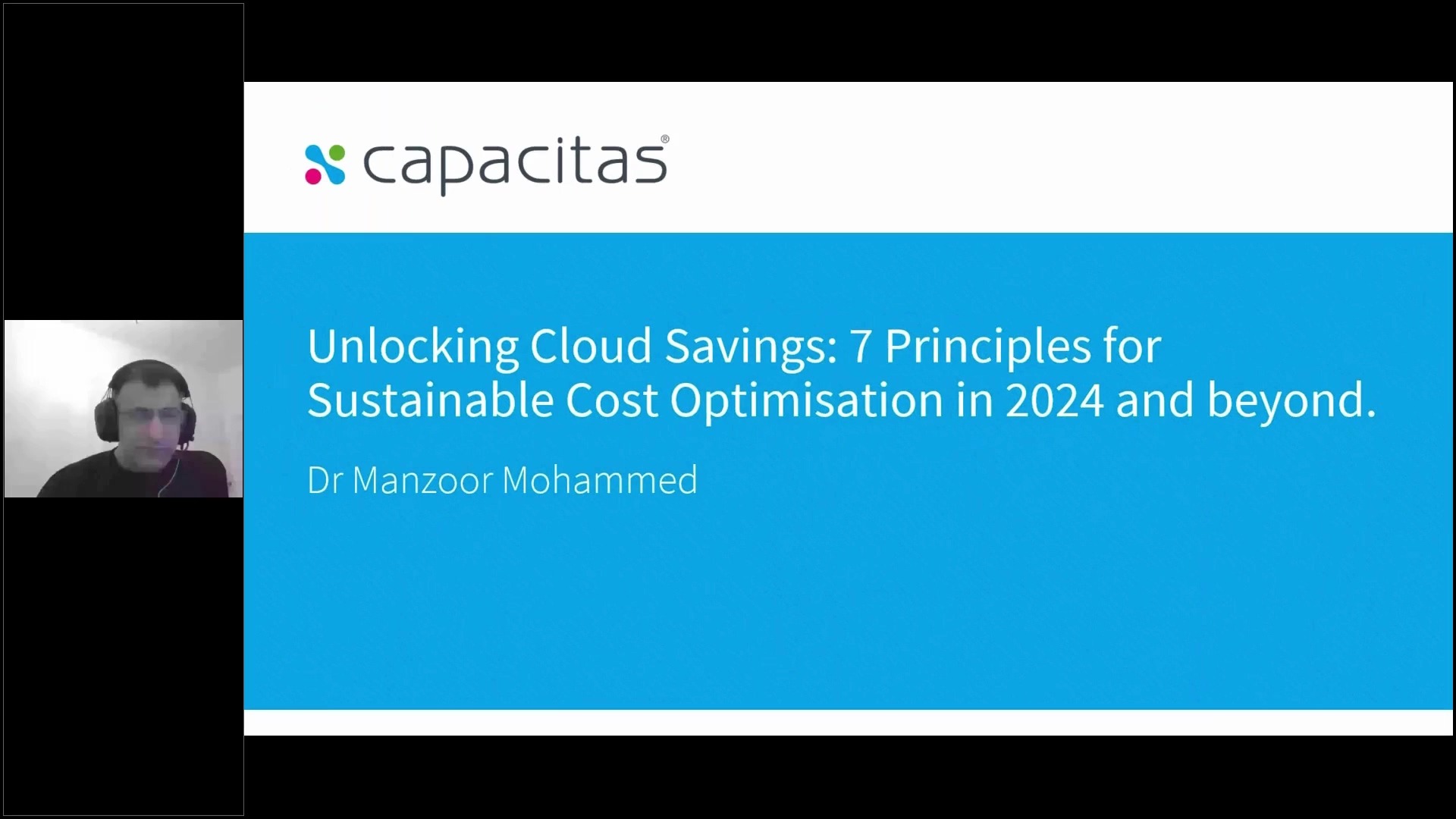


Global spending on public cloud services is predicted to hit $678.8 billion in 2024 – an increase of 20% from 2023, according to Gartner. Alongside increased cloud usage, cloud costs are increasing as well, placing pressure on organisations to ensure they are getting the most value from their technology. Cloud costs have a significant impact on business operations, from being able to fulfil innovation potential and invest in new technologies, to (negatively) affecting the bottom line. Not to mention internal pressures and challenges from the board or CIO around cost. Managing cloud costs becomes increasingly challenging the larger the business is.
Enter cloud cost optimisation – the focus of this webinar.
Cloud cost optimisation is not just about managing costs. It is about understanding what is driving those costs, where savings can be made in both the short and long term, and how to boost performance – all while positioning the business to take advantage of new technologies and be more competitive.
We will be discussing how to implement an effective cloud optimisation culture across an organisation for long-term, sustainable benefit. The webinar outlines a proven solution: cloud cost optimisation with a more thoughtful approach better suited to the new cloud technologies that are emerging in 2024 such as LLMs, along with seven principles on how to achieve them.
- Why cloud costs are important
- Why do so many companies struggle with cloud?
- 7 principles of cloud culture to address this challenge
- Focus on principles that teams find challenging, including:
- Principle 3 – Observability: Cost, performance and utilisation data over different time frames/contexts, including the use of APM, cloud cost tools etc.
- Principle 4 – Understanding: Quantify, measure, and articulate the business drivers of capacity utilisation, cost & performance of services.
- Principle 5 – Confidence: Ability & the confidence to make cloud infrastructure changes quickly & without impacting service reliability.