

Blogs
Date 29 June 2026
Part 1 of Statistics within Capacity Management and Performance Engineering Series.
Within this series I will be exploring the nature of statistical analysis within the world of Capacity and Performance Management. You can create as many pretty graphs and make wide ranging statements that effect the decisions of management but if you don’t know what is actually going on, then true understanding will always elude you. Herein an attempt is given to educate those lacking the formal education required.
The first piece for discussion is what is frequently termed Poisson distribution; what is little known is this is formulated from a limiting condition of binomial distribution. Binomial distribution defines the discrete probability, P, of x successes in a sequence of n independent yes or no experiments, each of which yields success with probability p.
The advantage of using poisson distribution is that n or p do not need to be known! This can make assumptions much easier.
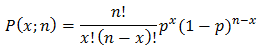
It is summed up neatly in the following equation:
(1)
If we add the following limiting cases:
(2) 
And observing that:
(3)
It is clear that p must tend to 0. Using these it allows us to reduce the equation (1) to reflect this.
(4) 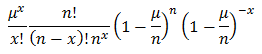
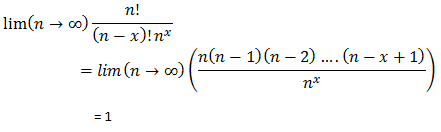
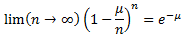
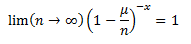
What’s interesting here that we can now apply the limiting constraints above to (4) to allow a much simpler evaluation.
(5)
(6) 
(7)
This then allows us to get to the conclusion that: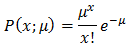
Which conveniently is the equation for Poisson distribution!!
Now that we have explored how to generate the equation for Poisson distribution, we are able to take this and prove that n or p need not be known. In the next instalment we will prove this, allowing full comprehensive understanding of the topic. Hopefully greater understanding of a mathematical tool has been shown and you can, without fear and with full understanding, understand Poisson distribution next time you encounter it.

About the author
Team Capacitas

FinOps and AI: Building the Financial Discipline for the Next Wave of Enterprise Intelligence
AI FinOps represents an evolution rather than a replacement of traditional FinOps. It extends the model into a domain where financial, technical, and product decisions are tightly interconnected.

Confidence Under Load: How We Verified AKS Readiness for Peak
How Capacitas verified AKS readiness for peak demand by validating workload performance, autoscaling, cluster capacity, monitoring, and incident response.
Building Cloud Resilience: Lessons from the AWS Outage
Learning from the Latest Outage. Events like this week’s AWS disruption highlight one clear truth: resilience must be designed, not assumed.
Bringing Order to Chaos: A Practical Guide to Chaos Testing in the Cloud
In today’s cloud-native environments, resilience is not optional—it’s critical. Chaos testing has emerged as a key practice for validating system behaviour under failure conditions.