

Blogs
Date 29 June 2026
Continuous Integration is designed to ensure quicker delivery of changes to production. But we still need to ensure these changes meet perform to expectation. How can we deliver performance assurance in the fast moving world of CI ?
There are 4 key ingredients:
- Automation
- Risk-driven approach
- Performance engineering strategy
- Smart test analysis
1. Automation
In a CI environment, speed and accuracy are some of the biggest challenges. You need to keep up with the increased level of change, but ensure that you are not creating noise. Automation of test execution and test analysis can give you this edge.

2. Risk-driven approach
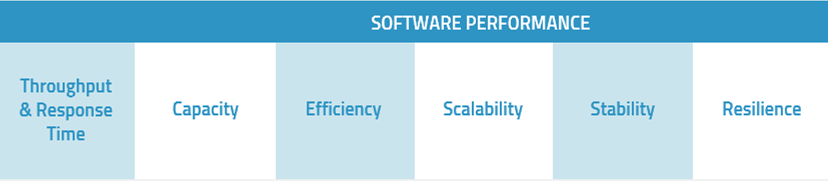
A risk-driven approach ensures that you only concentrate on the sources of performance risk and can help you to keep up with the velocity of change. Not all changes need to be tested. This goes hand in hand with automation as automating the testing process should free up the time to spend on assessing risk. There are 6 key sources of performance risk for which each change should be assessed and appropriate mitigation actions designed:
3. Performance engineering strategy
Define a strategy for testing in continuous integration. This could mean mitigating medium/low risks through gradual rollouts, monitoring in production, modelling or production testing. This video describes the strategy used at Arcadia
4. Smart test analysis
Pattern matching is a technique the should speed up the traditionally lengthiest part of the performance engineering process; analysis. By using these techniques and defining what “good” looks like, we can automate the process of finding “bad”:
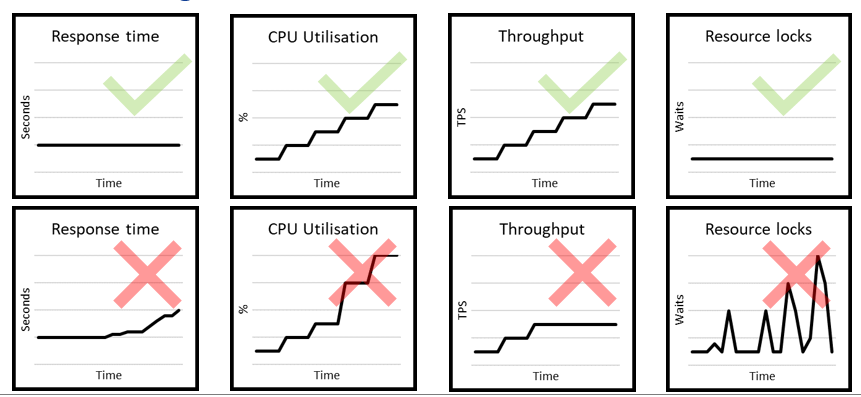
The next step is then to take that one step further with smart analysis, and using machine learning to gradually perfect the pattern matching process, reducing the frequency of false positive results.

About the author
Team Capacitas

FinOps and AI: Building the Financial Discipline for the Next Wave of Enterprise Intelligence
AI FinOps represents an evolution rather than a replacement of traditional FinOps. It extends the model into a domain where financial, technical, and product decisions are tightly interconnected.
Confidence Under Load: How We Verified AKS Readiness for Peak
How Capacitas verified AKS readiness for peak demand by validating workload performance, autoscaling, cluster capacity, monitoring, and incident response.
Building Cloud Resilience: Lessons from the AWS Outage
Learning from the Latest Outage. Events like this week’s AWS disruption highlight one clear truth: resilience must be designed, not assumed.
Bringing Order to Chaos: A Practical Guide to Chaos Testing in the Cloud
In today’s cloud-native environments, resilience is not optional—it’s critical. Chaos testing has emerged as a key practice for validating system behaviour under failure conditions.