

Blogs
Date 19 March 2018
Summary
- Infrastructure consumes large quantities of energy resulting in a significant chunk of a company’s costs and carbon footprint
- 6 to 12% of the energy used by data centres is actually used to perform computations on servers; the rest of the energy was used to maintain unused servers and server space on idle
- The energy savings by increasing server utilisation will also have an impact on overall revenue
- Capacitas work with clients to help increase reduce the cost of IT systems through capacity management

Background
The digital revolution has helped businesses around the globe to flourish by improving customer experience and efficiency. This has led to an ever increase in demand for such services from consumers which in turn resulted in enterprises relying on their IT departments to cater for such demands.
This results in companies investing in physical data centres and/or cloud services and migration. This increased demand for servers and storage equipment to support the running of application software and data storage is impacting both IT business costs and the businesses carbon footprint.
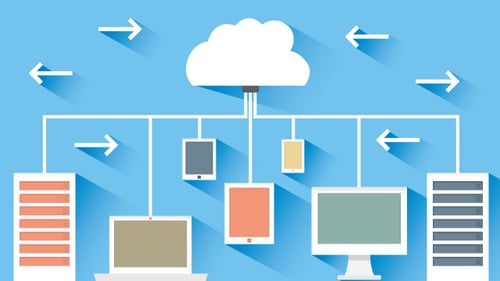
Only 6-12% of the CPU used in data centres is used for computational tasks
This increased infrastructure consumes large quantities of energy resulting in a significant chunk of a company’s costs and carbon footprint. A New York Times study carried out through McKinsey (1) showed that only 6 to 12% of the energy used by data centres was actually used to perform computations on servers; the rest of the energy was used to maintain unused servers and server space on idle.
- This means that more than 26 billion watts of electricity is ‘wasted’ keeping in mind that over 30 billion watts of electricity is used worldwide to power such centres.
- McKinsey found that most of this ‘wasted’ capacity comes from both large cloud computing providers and, small, medium and large sized corporations c
It can be challenging to identify the unutilized infrastructure due to concerns that this might affect the IT performance. It can also be challenging once you have identified the ares of underutilisation to be able to conduct effective infrastructure consolidation.
For more information on how we deliver help businesses control cost click here

About the author
Gerald Mercieca
FinOps and AI: Building the Financial Discipline for the Next Wave of Enterprise Intelligence
AI FinOps represents an evolution rather than a replacement of traditional FinOps. It extends the model into a domain where financial, technical, and product decisions are tightly interconnected.

Confidence Under Load: How We Verified AKS Readiness for Peak
How Capacitas verified AKS readiness for peak demand by validating workload performance, autoscaling, cluster capacity, monitoring, and incident response.
Building Cloud Resilience: Lessons from the AWS Outage
Learning from the Latest Outage. Events like this week’s AWS disruption highlight one clear truth: resilience must be designed, not assumed.
Bringing Order to Chaos: A Practical Guide to Chaos Testing in the Cloud
In today’s cloud-native environments, resilience is not optional—it’s critical. Chaos testing has emerged as a key practice for validating system behaviour under failure conditions.