

Blogs
Date 29 June 2026
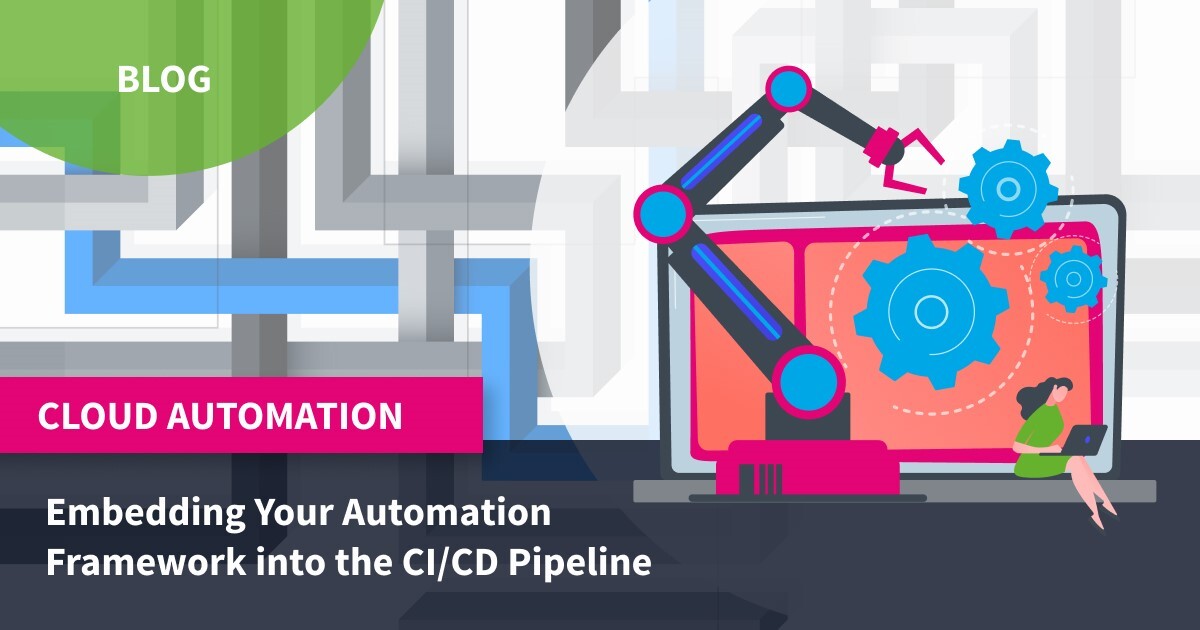
As we touched upon in previous posts in the series, embedding your frameworks in your pipelines is an incredibly powerful way to manage and execute your automation frameworks.
Previous posts:
To ensure efficient and reliable automation testing, it is crucial to embed your chosen framework seamlessly into your CI/CD pipeline. This integration enables automated test execution, continuous feedback, and faster delivery of quality software. In this blog post, I will go over the steps and best practises for integrating your automation framework, with a particular focus on Cypress.
You can streamline your development process and achieve faster feedback cycles by following these guidelines:
Selecting the right CI/CD Tool
The first step in embedding your automation framework into the pipeline is selecting the right CI/CD tool. Popular options include GitHub Actions, Jenkins, and GitLab CI/CD. Consider your team's preferences and existing infrastructure. Ensure that the chosen tool supports running your framework tests and can easily integrate with your version control system. Cypress can seamlessly integrate with all of the tools listed.
Version Control Integration
It is critical to integrate your automation framework with version control to track changes, maintain code history, and facilitate collaboration. Ascertain that your CI/CD pipeline is configured to retrieve the most recent code from your version control system, such as Git. This ensures that your tests are always running against the most recent framework version.
Setting Up the Testing Dependencies
Your pipeline/workflow should include all the steps required to set up and install all required dependencies. For Cypress this typically requires Node.js to be installed along with project-specific npm or yarn dependencies from your package.json file. Ensure that the pipeline provisions the required environment and installs the necessary dependencies before executing the tests.
Configuring Test Execution
Configure your CI/CD pipeline to execute the Cypress tests as part of the build process. Cypress provides a command-line interface (CLI) that allows you to trigger test runs using simple commands. You can use this CLI within your pipeline script to run the tests against your application. Consider passing any required environment variables, configuration files, or test data to the Cypress CLI for proper test execution.
Managing Test Results and Artifacts
As part of your pipeline configuration, define how the test results and artefacts should be managed. Cypress generates detailed reports, screenshots, and videos of test runs. You can configure your pipeline to store these artefacts for later analysis and reference. Additionally, and top tip, consider integrating with reporting tools or platforms to consolidate test results and generate actionable insights.
Handling Test Failures and Notifications
Incorporate mechanisms to handle test failures and receive notifications in your pipeline. When a test fails, ensure that the pipeline marks the build as failed and provides relevant information about the failure. Consider sending notifications via email, chat, or other communication channels to alert the development team about test failures and facilitate quick troubleshooting.
Parallel and Distributed Execution
If your test suite is large or if you want to reduce execution time, consider implementing parallel or distributed test execution. As we have briefly mentioned before: Cypress cloud supports parallel test execution out of the box, but as a free alternative we have created our own workflows and scripts that will sensibly calculate and split workloads over a configured number of runners. We will be sharing some of these details in the future! Configuring your pipeline to execute tests in parallel, maximizing resource utilisation and reducing overall execution time.
Continuous Monitoring and Integration
To ensure the ongoing health and effectiveness of your pipeline, incorporate continuous monitoring and integration. Regularly review and update your pipeline configuration, scripts, and dependencies to stay aligned with the evolving needs of your automation framework. Leverage pipeline analytics and monitoring tools to gain insights into test performance, execution times, and trends.
In summary, integrating your framework in a pipeline is incredibly simple to do and is extremely powerful as both a management and execution tool. If you bear in mind the points, we have covered in this article you will be able to create and maintain workflows that are concise and applicable for all your projects.

Also worth having a look at some of our recent case studies where we have saved our clients Millions of pounds in cloud spend.



About the author
Team Capacitas

FinOps and AI: Building the Financial Discipline for the Next Wave of Enterprise Intelligence
AI FinOps represents an evolution rather than a replacement of traditional FinOps. It extends the model into a domain where financial, technical, and product decisions are tightly interconnected.

Confidence Under Load: How We Verified AKS Readiness for Peak
How Capacitas verified AKS readiness for peak demand by validating workload performance, autoscaling, cluster capacity, monitoring, and incident response.
Building Cloud Resilience: Lessons from the AWS Outage
Learning from the Latest Outage. Events like this week’s AWS disruption highlight one clear truth: resilience must be designed, not assumed.
Bringing Order to Chaos: A Practical Guide to Chaos Testing in the Cloud
In today’s cloud-native environments, resilience is not optional—it’s critical. Chaos testing has emerged as a key practice for validating system behaviour under failure conditions.